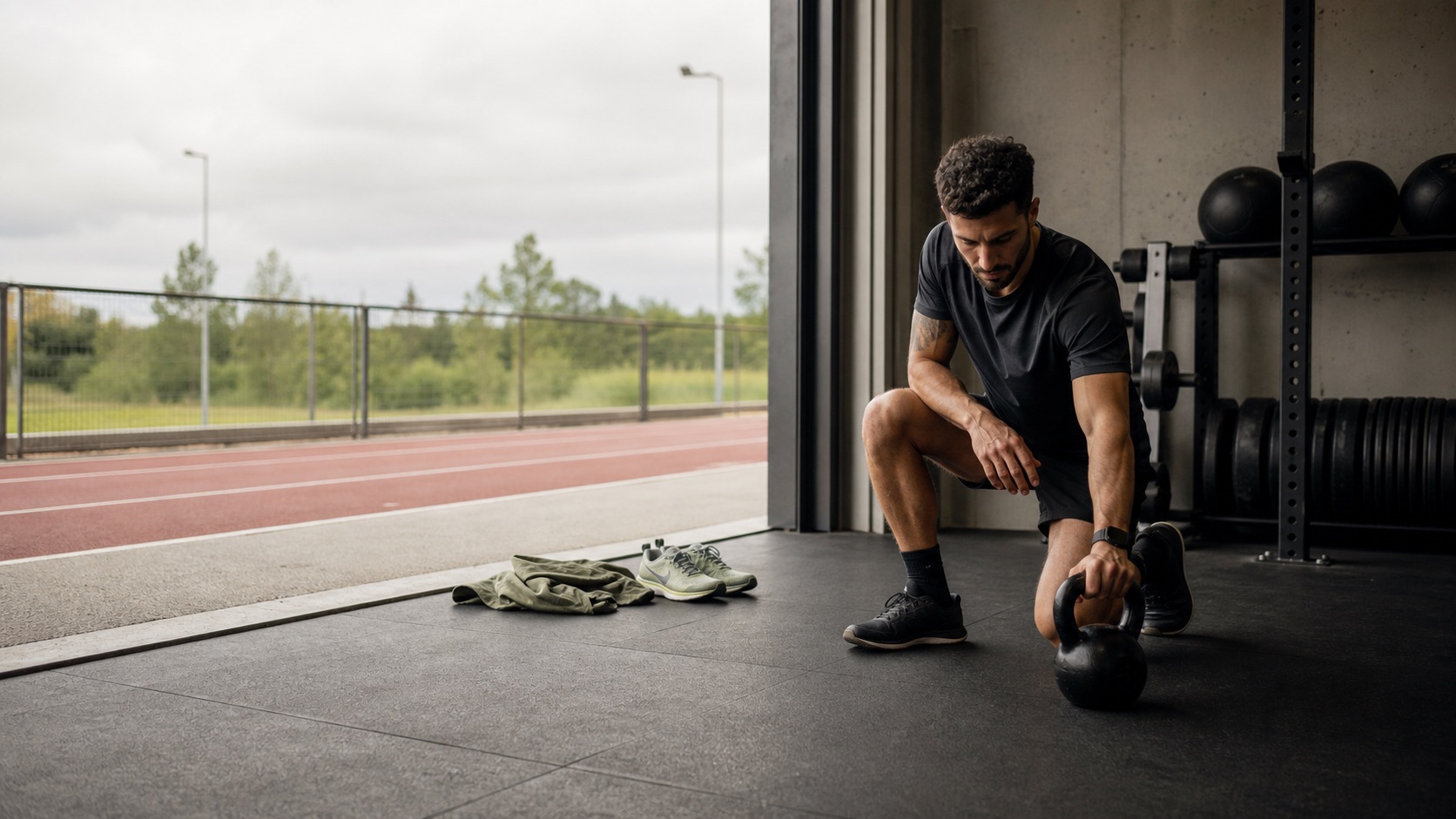
Hybrid fitness training
A hybrid fitness training plan that fits the rest of your week
Hybrid fitness asks you to develop more than one quality at once: often running alongside functional strength, conditioning and movement skill. A useful plan needs more than a list of hard sessions. It needs to balance what you want to improve with the training and life you already have in the week.
Start with the demands of hybrid training
Hybrid training brings different physical demands into the same week. You may be working on running rhythm, strength endurance, carries, pushing, pulling or transitions between efforts. The hard part is not finding a challenging workout; it is deciding which quality deserves attention today and what should wait until you have recovered.
Build a week around a few clear purposes instead of making every session a full simulation. Some sessions can improve running control, some can develop strength and movement confidence, and some can simply help you arrive fresh enough to train consistently.
Build a balanced hybrid fitness week
There is no universal weekly template, because experience, available time, event goals and other sports all matter. A balanced week often includes a mix of easy and quality running, functional strength work, and space to recover. The exact number and order should fit your training history—not a rigid checklist.
Keep each session focused. For example, a running workout can concentrate on pace control, while a strength session can develop lower-body, push, pull and carry patterns. A combined session can be useful when you want to practise moving from running into functional work, but it does not need to dominate every week.
An example hybrid week you can adapt
Treat this as a starting shape, not a prescription. It assumes four training days around work, other sports and normal life; scale it down to three days or up to five by adding or removing an easy session first, not a hard one.
- Day 1 — Quality run: a focused session such as 6×2 minutes at a controlled hard pace with equal easy jog recoveries, inside an easy warm-up and cool-down.
- Day 2 — Functional strength: lower body, push, pull and a loaded carry. For example: squats or lunges, a press, a row, then farmer carries to finish.
- Day 3 — Easy aerobic run: 30–45 minutes at a pace where you could hold a conversation. This is where a lot of the running progress actually comes from.
- Day 4 — Mixed session: shorter strength work combined with running or conditioning efforts, practising the transition between moving and lifting.
- Remaining days: rest, mobility, or the other sports already in your life — they count as training load too.
The order matters less than the spacing: keep a hard run and a heavy lower-body day apart when you can, and protect at least one genuinely easy day. If a session collides with real life, shrink it rather than skipping the week.
Let the workout match the place you train
Your plan has to survive normal life. Some days you have a full gym; other days you have a living room, a calisthenics park or only a route for a run. S3SSIONS lets you tell the coach where you are and what equipment is available, so the next session can reflect today’s setting instead of forcing a workout you cannot complete.
That makes it easier to keep momentum without pretending all locations are the same. The coach can guide strength, functional, mobility and running sessions from your iPhone, and compatible workouts can be handed to Apple Watch for live pace, heart-rate and zone guidance.
Use the rest of your training as context
Hybrid training rarely happens in a vacuum. Maybe you played volleyball, cycled at the weekend or logged a hard gym session yesterday. S3SSIONS is designed to consider your goal and recent training across the activities that reach Apple Health, alongside the sessions you complete in the app. The result is a more informed starting point for the next decision.
That does not replace listening to your body or getting professional advice when needed. It does help avoid the common pattern of planning a demanding session in isolation from everything that came before it.
Make the plan adaptable, not perfect on paper
A plan only works if you can follow it. When a day changes, adjust the session instead of abandoning the week. In S3SSIONS, you can ask the coach to make a workout shorter, harder, or swap an exercise. It updates the workout in place, so you can retain the intent while changing the format.
If running is the part you want to develop most, explore our running workout planner guide. For guidance on seeing pace and heart-rate information on your wrist, read the Apple Watch workout app guide. You can also see how an AI workout planner or a personal trainer app can help turn your training context into a next step.
Turn today’s context into the next session
The point of a hybrid fitness plan is not to collect the most exhausting workouts. It is to make the next useful decision: what to train today, in the time and place you have, based on what you have already done. S3SSIONS is built around that decision—one tap creates the next workout, then guides you through it rep by rep.
Hybrid fitness training FAQ
How many days a week should I train for hybrid fitness?
It depends on your current training, experience, goals and other activities. A plan is more useful when it balances running, functional work and recovery than when it simply adds more hard days.
Can I train hybrid fitness without a full gym?
You can still train relevant movement patterns and running outside a full gym. S3SSIONS can tailor a session to the equipment and location you have today.
Can S3SSIONS adapt a workout when my plan changes?
Yes. You can tell the coach to change the duration, intensity or an exercise, and it updates the workout in place.
Build the next useful hybrid workout
Tell the coach your goal, today’s location and what you have already done.
Download S3SSIONS on the App Store